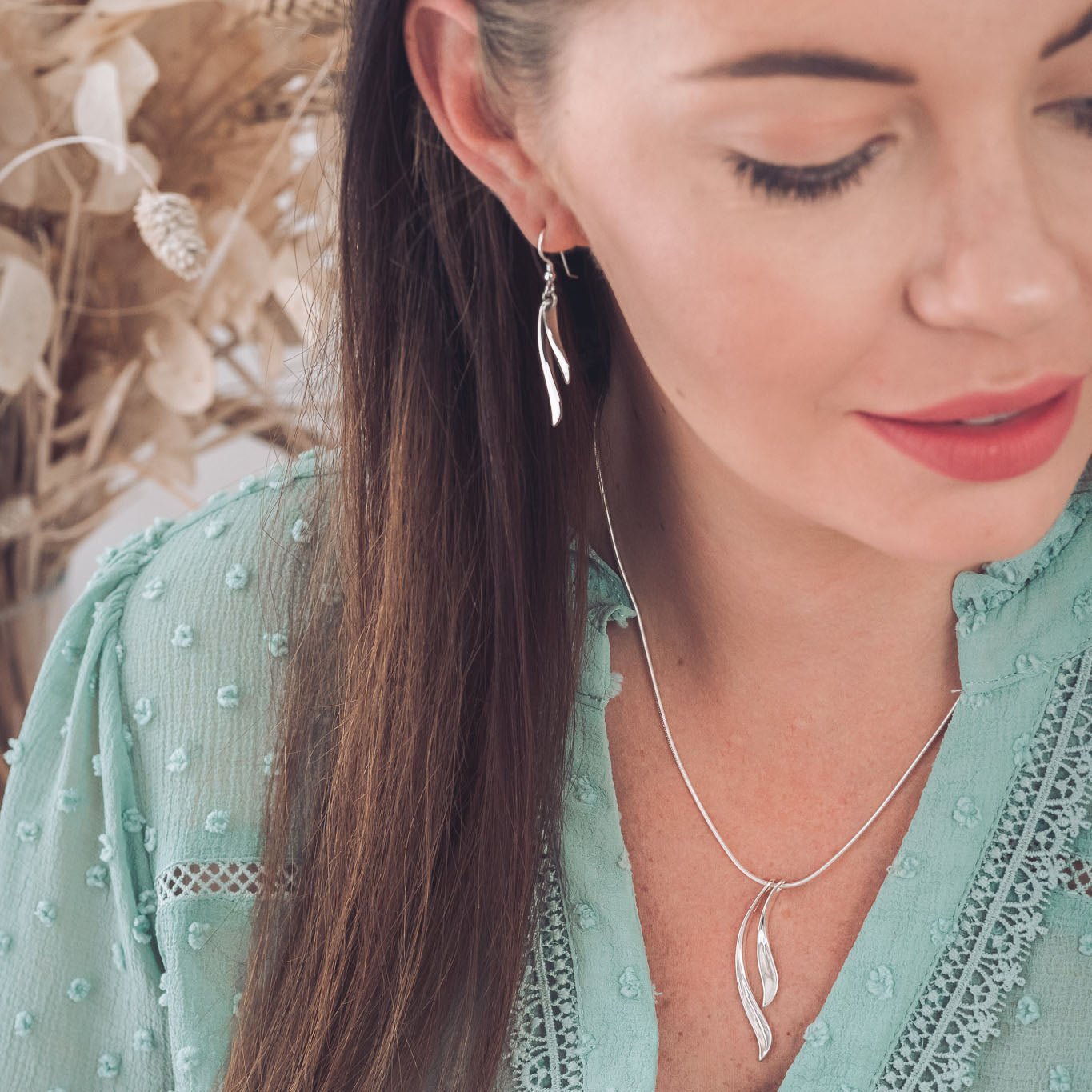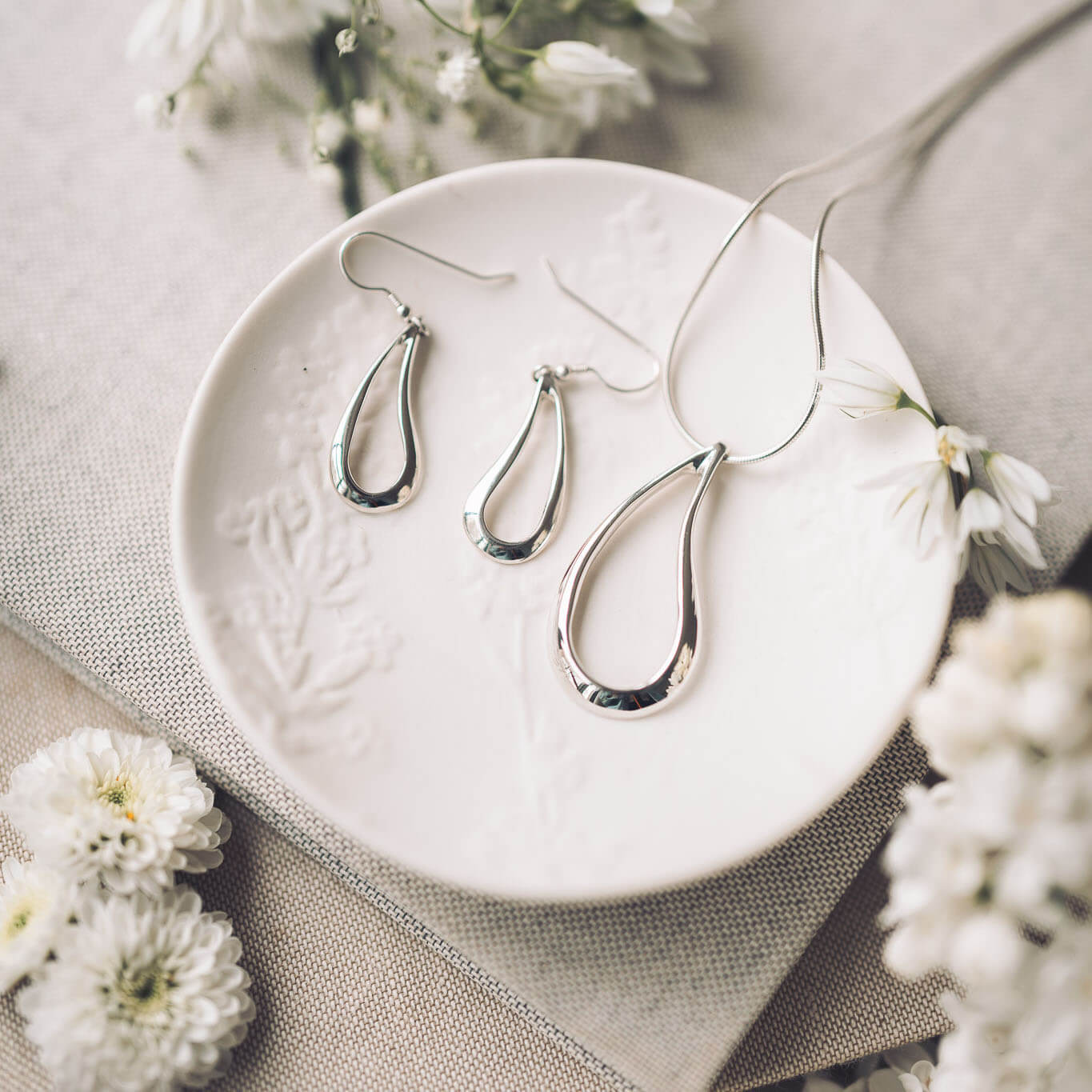

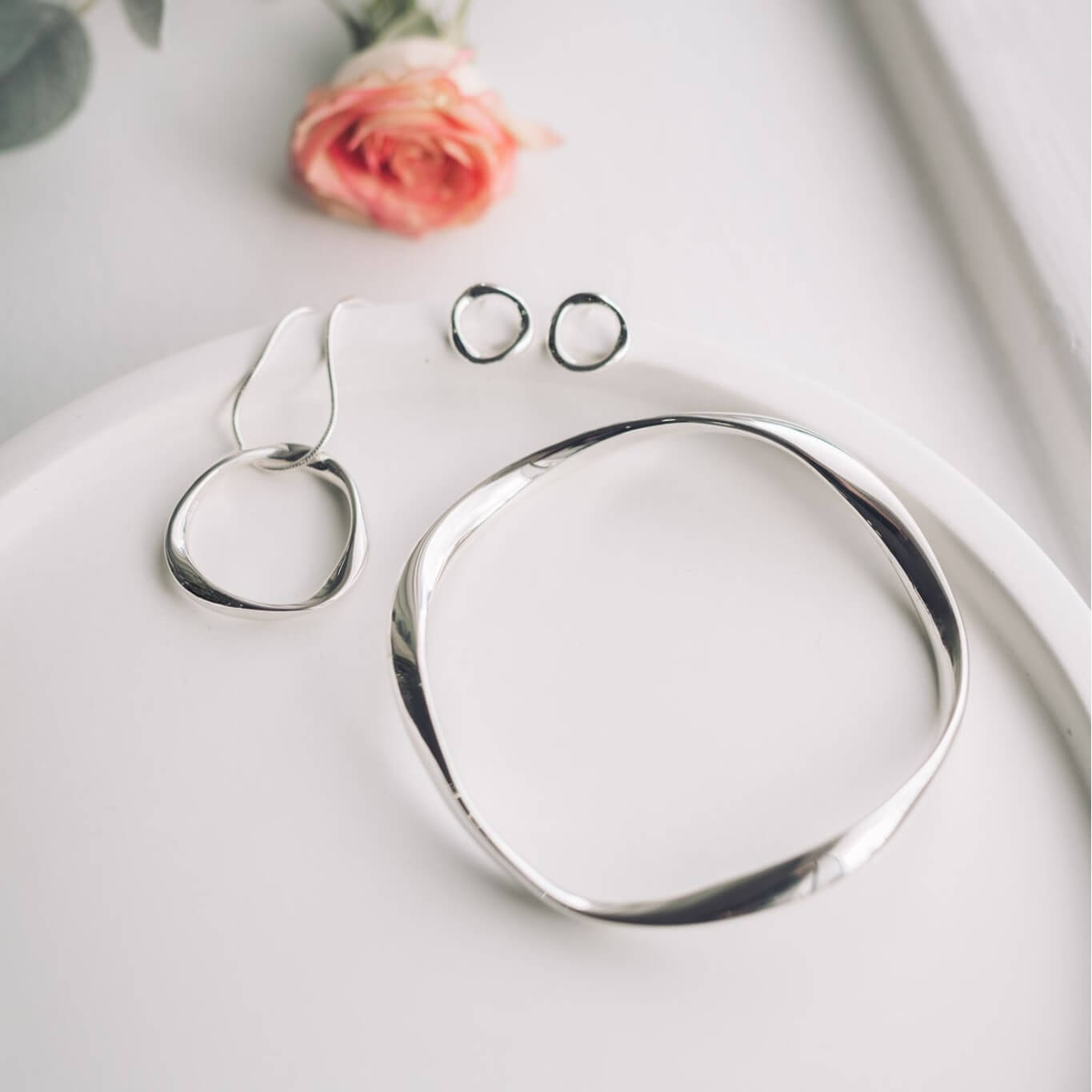
Layered necklaces look effortless in photographs and on the people who seem to wear them naturally. In practice, most people who try it end up with a tangled knot by lunchtime and a single chain worn alone for the rest of the day.
The good news is that layering well comes down to a small number of principles. Once you know them, it becomes second nature.
Key Takeaways
- Vary your lengths: chains sitting within a centimetre of each other will tangle constantly. Aim for collarbone, mid-chest and lower pendant as three distinct lengths.
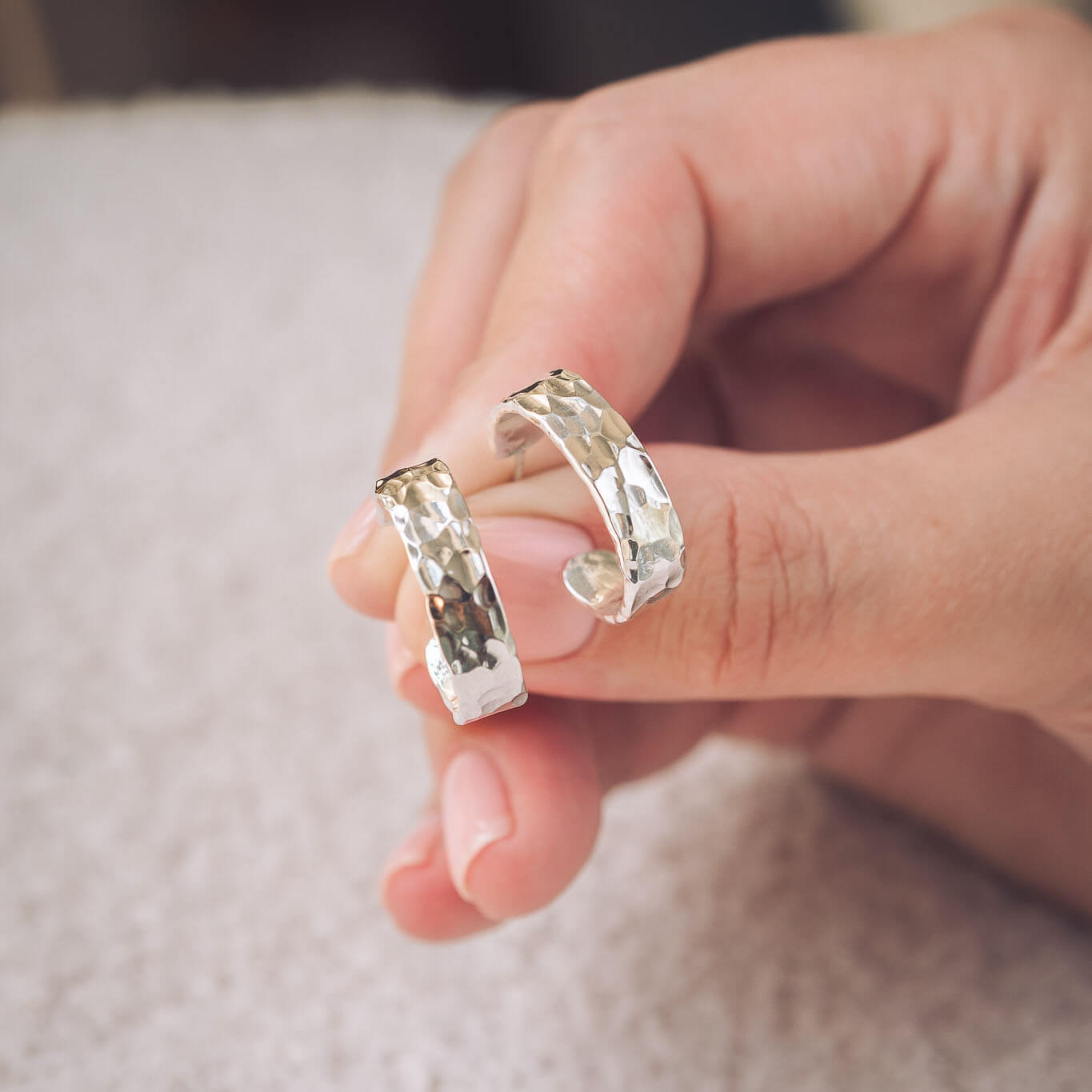
- Mix textures and weights: a smooth chain alongside a hammered or twisted piece like the Bramble or Fairy collection adds visual interest and reduces tangling.
- Put your longest necklace on first then work upward: This keeps chains from crossing as you fasten them.
- Store necklaces separately: most tangling happens in the drawer, not on the body. Loop each one over a hook or pin when not in use. Browse our silver pendant necklaces.
Why Necklaces Tangle in the First Place
Tangling almost always comes down to two things:
- Chains of similar length sitting at the same point on the chest.
- Pendants that swing freely enough to catch on each other during movement.
Solve those two problems and most tangling disappears entirely. It’s more about choosing the right combination of pieces from the start than it is about any clever trick for untangling chains once they have already knotted together.

Full length availability
| Length | Where it sits | JGT availability |
|---|---|---|
| 16" | Base of neck / collarbone | Available |
| 18" | Just below collarbone | Standard on all pendants |
| 20" | Upper chest | Available |
| 24" | Mid-chest | Option on selected pieces |
| 30" | Lower chest / statement | Chains sold separately |
Start With Different Lengths
The single most important rule in layering is to vary your lengths with intention. Two chains that sit within a centimetre or two of each other will tangle constantly, since they occupy almost exactly the same space and brush against one another with every movement.
A reliable starting combination is a shorter chain sitting at or just below the collarbone, a mid length chain sitting at the top of the bust and a longer pendant resting further down.
Each length should have its own clear space to sit in, rather than competing for the same area of the chest.
Vary the Weight and Style
Layering works best when pieces are different enough from each other to feel intentional rather than accidental. Pairing a delicate chain with a slightly heavier statement pendant creates a sense of contrast and hierarchy.
Mixing textures helps too. A smooth polished chain alongside a hammered or twisted piece, like our Bramble or Fairy designs, adds visual interest.
Three thoughtfully chosen pieces will almost always look better, and tangle less, than five pieces fighting for the same space.

Consider Clasp Placement and Chain Type
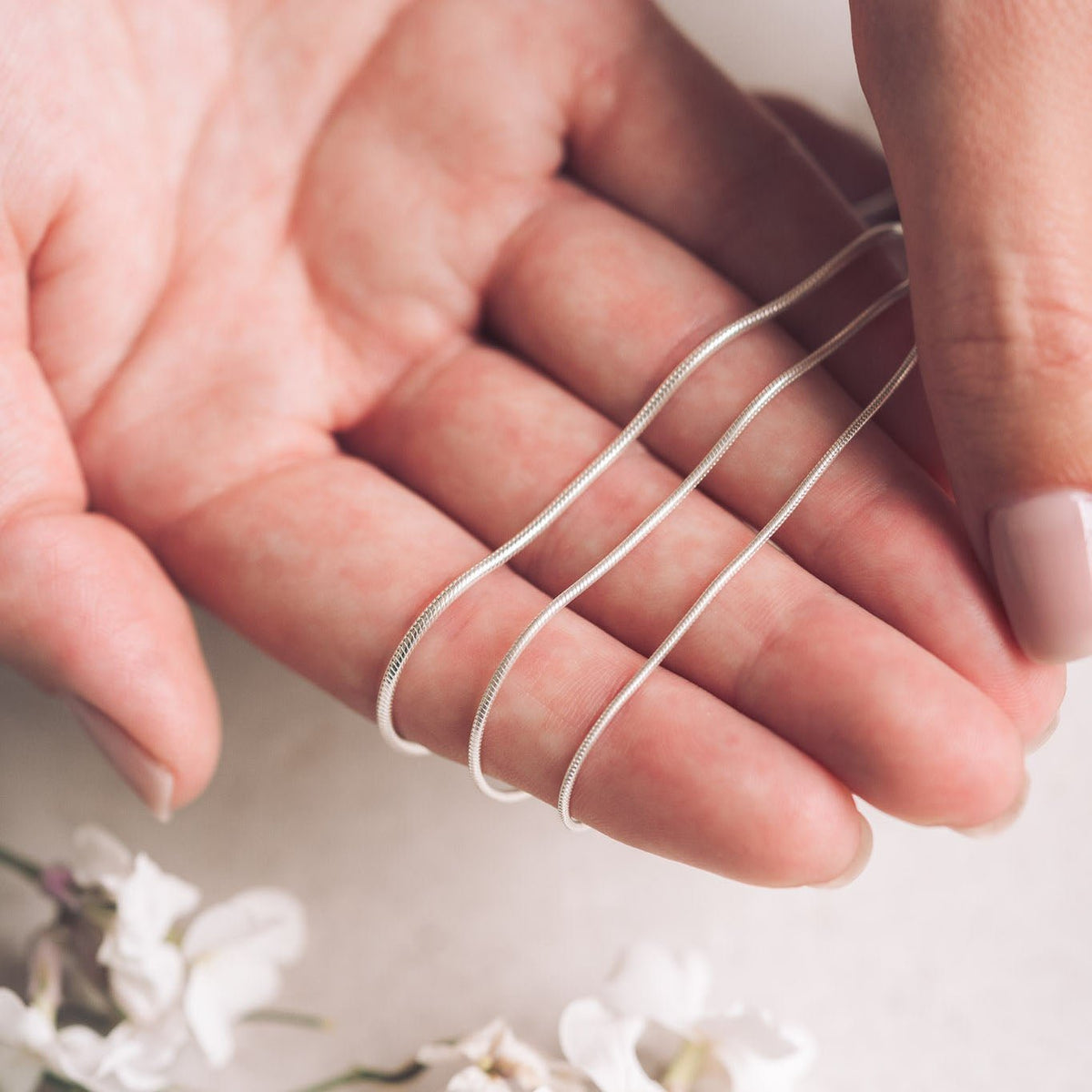
Certain chain styles are simply more prone to tangling than others. Fine, delicate chains with small links catch far more easily than chains with slightly more substantial links or a flatter profile.
If you are building a layering set from scratch, choosing at least one piece with a slightly more structured chain will save you a great deal of frustration.
Clasp placement matters too. If you are layering pieces yourself each morning, putting on your longest necklace first and working upward to the shortest tends to keep chains from crossing over each other as you fasten them.
Everyday Layering Versus Going Out
For daily wear, two or three pieces in clearly different lengths is usually the most practical and the most wearable. A simple pendant with a slightly longer chain underneath gives you the layered look without excessive movement throughout a busy day.
For evenings and special occasions, you can afford to add a third or fourth piece and lean into more dramatic length variation. This works as you are less likely to be moving around as much as you would during a typical day.
This is where a heart pendant or statement piece from our Zoe or Florence collections works particularly well as the anchor piece, with finer chains layered above it.

Top Tips From the John Garland-Taylor Team
- If your necklaces do tangle despite your best efforts, a small drop of baby oil or a fine sewing needle worked gently into the knot will loosen it.
- Store your necklaces separately when not in use, even briefly looping each one over a hook or pin rather than dropping them all into the same drawer or pouch.
-
Our customers who layer successfully tend to build their combination slowly. It's best to add one new length or texture at a time, rather than buying several necklaces at once and hoping they work together.
Browse our collection of handmade silver necklaces and necklace chains to find the lengths and textures that will work well together, starting with one anchor piece and building from there.
If you would like help putting a layered combination together, our team is always happy to help.